
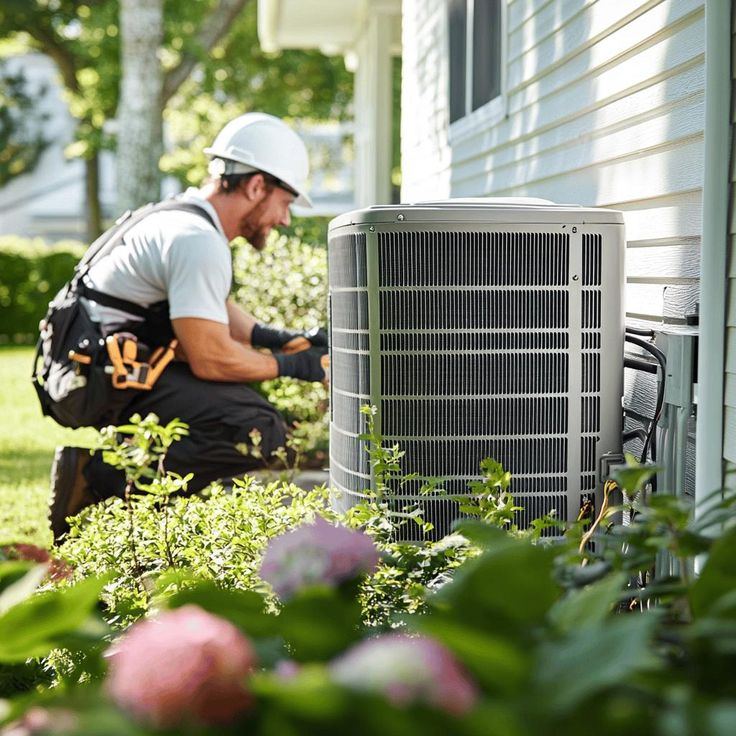
A tech finishes a job at four in the afternoon. The office receives incomplete information or they don't hear anything at all till the next morning. On the same day, a customer calls about a unit you serviced seven months ago. The rep who picked up the call can't find any of the service history and the customer is still on the call.
The gap between what happens in the field and what context the business actually has is a real problem. It's not about getting more software, the problem is the disconnect.
HVAC runs on two halves that sometimes forget to talk to each other. Techs are out on calls. The office is buried in invoices, quotes and service requests. Each half holds information the other needs and neither has it when it matters the most.
The information can live on people's phones or minds or spreadsheets but it gets outdated or inaccurate pretty quickly. A CRM as the single source of truth is the right move for growing HVAC businesses. This is how to choose one that works.
What Is The Most Expensive Problem Your HVAC Business Is Dealing With?
Before you look for products, name the thing that's costing your business money. There are plenty of CRMs out there with a whole list of features but they will remain just that, a list of features, unless you identify the core challenge for your HVAC business.
For most HVAC businesses we have conversations with, the estimate a tech promised to send sits in somebody's inbox. A maintenance request is forgotten because people's memories are imperfect. A repeat customer gets treated like a stranger because all the history is in a notebook.
40% of salespeople still keep customer information in spreadsheets and emails. In the HVAC industry, the number on the ground feels higher because the field side of the business often runs on no system at all. A competent tech could still remember unless he quits or goes on vacation, and then all that customer information walks out too.
Start by asking the tough questions and identify your gaps. Your CRM must help you address it specifically so that's what you shop for.
Do You Want A CRM Or A Field Service Software (FSM)?
This is an important decision to make before proceeding. Picking the wrong one means you end up with a tool that solves the wrong problem.
A CRM owns customer relationships. Leads, follow ups, pipeline, service history.
FSM owns the job. Dispatch. Scheduling. Technician routing. Work orders. It answers who's going where and when.
If you need both, you don't have to choose. Start with the gap that's costing you money today. For most HVAC businesses, that's customer operations.
What An HVAC CRM Has To Do
A CRM is more than a place for you to store your contacts. It's not a directory. A contact list tells you who someone is. It doesn't tell you what you promised them, when you last saw them and what's due next.
Here's the work a CRM can take of your plate so that you can focus on what your HVAC business needs the most.
- Track leads from the first call. Someone phones in about a noisy condenser or fills in a form on your site. With a CRM, the leads will land in one place with a name and clear next step attached to it. Nothing waits in an inbox for someone to notice it.
- Automate follow ups and reminders. You can send a booking confirmation, nudge customers who haven't approved a quote and flag a technician's report that hasn't arrived yet. Work that used to depend on someone remembering now happens on its own.
- Hold the complete service history. Every visit, every part, every conversation is available in one customer record. When a repeat customer calls, whoever answers the phone can see the full story before they finish saying "hello".
- Schedule maintenance before the customer thinks about it. Service contracts and seasonal tune-ups are recurring revenue. The CRM has your schedule and sends reminders so you can prompt a pre-summer AC check at the right time.
- Put customer information in the tech's pocket. On a job, a tech can pull up the address, service history, past complaints and notes from previous visits. The person standing in front of the customer has the same information the back end has.
- Show you the business on a dashboard. Open jobs, outstanding invoices, revenue this month, business lost. As the owner, you get a complete view without asking people across departments and cobbling it all together.
Notice what all these benefits have in common. Each of them is about a handoff or transfer of information. Your team could be great at their job and a CRM helps them succeed with the right information and saves their time with automation.
The CRM Looks Different For Residential and Commercial HVAC
If you do both, that's alright. Your CRM can handle the two sides.
Residential HVAC work is high volume with a short sales cycle. A homeowner calls, you send a quote and book the deal. The relationship could live on and you could show up again next season, or it could end peacefully and you move on to the next customer. The CRM's focus is speed and memory. You want reliable reminders and a service history that makes a customer want to return.
Commercial is fewer deals with longer sales cycles and more people in the room. A property manager or facilities lead might be involved and there could be contracts. The sales cycle could be weeks or months with multiple rounds of approvals and meetings. Here, you need a CRM that can track the pipeline with different stages and hold multiple contacts against one account.
Not sure where to start? Reach out to us for a free Bigin walkthrough tailored to your HVAC business.
Why We Recommend Bigin By Zoho CRM For Your HVAC Business
There are plenty of CRMs out there. What stops HVAC businesses from picking or sticking to one of them comes down to either cost or complexity.
You have CRMs built for enterprise sales teams or CRMs stuck behind tiers and paywalls. Around 49% of small and mid sized businesses use a CRM but are surprised by how heavy or complex it turned out to be for them.
Bigin by Zoho CRM was built simply with small businesses in mind. It starts at $7 per user per month, a price HVAC businesses can easily afford and get value out of without worrying about breaking the bank. There are no seat minimums or mandatory onboarding fees. You pay for what you get. Actually, you get a lot more than that.
You can create multiple pipelines for your residential and commercial business. You can store all your customer information in one place, with the right context, automate follow ups and generate important reports for your business.
Bigin also has the advantage of being part of the Zoho ecosystem. Need something later for accounting? You have Zoho Books. Need a tool for your techs? You have Zoho FSM. Need to respond to customer queries? You have Zoho Desk.
There are plenty of opportunities for expansion as you grow without worrying about migrating your data or paying exorbitant fees.
Another benefit is that Bigin is simple to use. Your CRM will only generate value and actually stick if your team uses it. A tool that is not opened after the first month is dead weight. Using Bigin feels intuitive and adoption is only a habit away.
The best CRM for you would be the one your team wants to use after the initial novelty wears off.
Here's the full pricing breakdown for Bigin.
Where A Zoho Implementation Partner Makes The Difference
You can set up Bigin for yourselves. Plenty of businesses do and that's a fair starting point. A Zoho partner on the other hand, makes the tool work for your business instead of bending your business around the new tool.
When you work with Cirro, you get a team of Zoho alumni. People who have worked with Zoho with proven expertise about the products.
We start by understanding how your business runs. How the leads come in. Who follows up with them. How you track your leads. What a maintenance contract looks like for you specifically.
Then we build the pipeline and automations around that so that your CRM reflects the work you do from day one instead of being a generic template you have to wrestle with to get in shape.
Another part where most CRM projects fail is training and onboarding. The system gets configured, a few people log in but it's half empty three months later because nobody is really shown how to use it. We train your staff to use the CRM the way it should be used and make their lives easier.
Getting an HVAC team to run on one tool is less about software and more about implementation. That's the part we own entirely. Check out our complete guide to Bigin for more details.
Before You Choose Your HVAC CRM
Look beyond the product page and features list. Find the gap that's costing you money. Choose the tool that effectively closes that gap. Choose the tool your team will actually use.
For most HVAC businesses, this means a tool that gives you ROI quickly, is fast to adopt and built for a small team. Bigin checks all those boxes.
Start by writing down the three most important things that are failing today. That list now becomes your decision criteria. Everything else is just nice to have.